
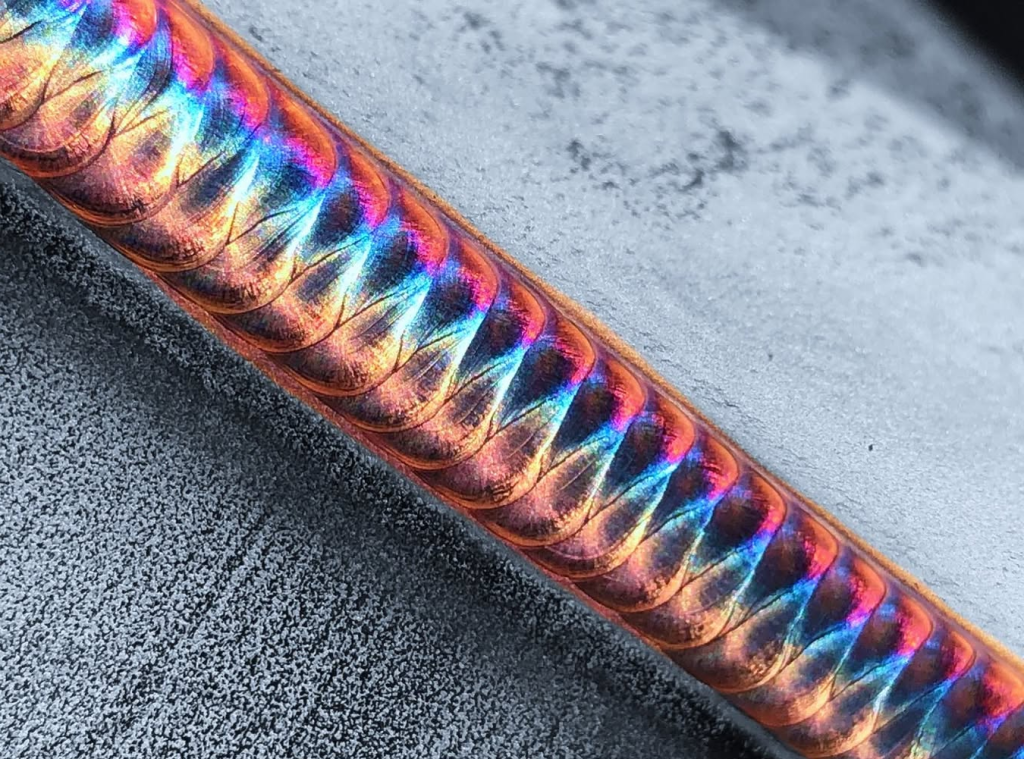
In the metal processing industry, a golden rule applies: 80% of a product’s costs are determined during the design phase. For complex weldments, this rule is even more pronounced. The wrong choice of material, overly demanding tolerances, or ill-considered weld placement can double production time and drastically increase costs.
At Sico d.o.o., we collaborate daily with designers from various industries. We have noticed that small improvements in 3D models yield significant savings in real-world production. In this guide, we will reveal key strategies for optimizing weldments that will save your company time and money.
1. Think About the Entire Process (Design for Manufacturing – DFM)
Optimization doesn’t start at the welding machine, but at laser cutting and bending.
Use of Tab-and-Slot Joints
One of the best techniques enabled by our precision laser cutting is the “tab-and-slot” system. Instead of a welder spending hours measuring and fixing parts in jigs, you can design parts to fit together like “Lego blocks.”
Advantage: Automatic positioning, reduced need for expensive clamping fixtures, and lower chance of human error.
Replace Welds with Bending
Whenever possible, use CNC bending instead of welding two plates at an angle. Every weld replaced by a bend means:
Fewer thermal deformations of the material.
Lower labor costs (bending is faster than welding).
Better structural strength and a cleaner aesthetic appearance.
2. Correct Selection of Weld Type and Size
Bigger is not always better. Oversized welds are one of the most common errors in project documentation.
Avoid “Over-welding”
If a fillet weld of size $a=3$ mm is sufficient for the strength of the joint, designing a weld of $a=6$ mm does not just mean twice the work, but four times more filler material and heat.
Consequence: Greater material warping (distortion) and more time spent on subsequent straightening.
Accessibility for the Welder (or Robot)
Designers in CAD environments often forget the physical size of the welding torch. If the welder cannot reach the joint at the correct angle, the weld quality will suffer.
Tip: Ensure enough space for access and consider the welder’s line of sight. If you are planning for robotic welding, this point is even more critical, as the robot needs a precisely defined path without obstacles.
3. Managing Thermal Deformations
Welding is a thermal process that introduces stresses into the material. How can these be minimized during design?
Weld Symmetry: Design welds symmetrically around the neutral axis of the profile. This helps stresses cancel each other out.
Intermittent Welds: If a fully sealed joint is not required, use intermittent welds. These reduce heat input and are perfectly adequate for structural strength.
Assembly Sequence: Design the product as an assembly of several smaller sub-groups. It is easier to manage deformations on a small piece than on a full 5-meter frame.
4. Edge Preparation and Tolerances
Weld quality is directly dependent on joint preparation.
V-preparation and Weld Root
For thicker materials (above 5–6 mm), mechanical edge preparation (beveling) is necessary. At Sico d.o.o., we perform this using CNC technology, ensuring a uniform weld penetration along the entire length.
Tolerances: Excessive gaps between parts due to poor cutting lead to “burn-through” and holes. Our high-precision laser cutting ensures minimal gaps, which is ideal for robotic welding.
5. Aesthetics and Finishing
In industries such as pharmaceuticals, the appearance of the weld is key.
Weld Position: If possible, place welds in areas that are not visible on the final product.
Grinding and Polishing: If a weld must be ground precisely, ensure enough space for the grinding tool. Designing welds in narrow corners that require polishing drastically increases the final price due to manual labor.
Cooperation with Sico d.o.o. from the Idea Phase
The best results occur when the client’s engineers and our technologists connect as early as the prototype phase. At Sico d.o.o., we don’t just weld – we understand metallurgy and manufacturing processes. With our modern machinery for laser cutting, bending, and welding (TIG, MIG, MAG, and robotic welding), we turn your vision into an optimized final product.
Do you want to optimize your next project?
Send us your plans and our technologists will advise you on how to improve the manufacturing process and reduce costs. Call us at +386 (0)3 703 88 05 or email us at: prodaja@sico.si.

